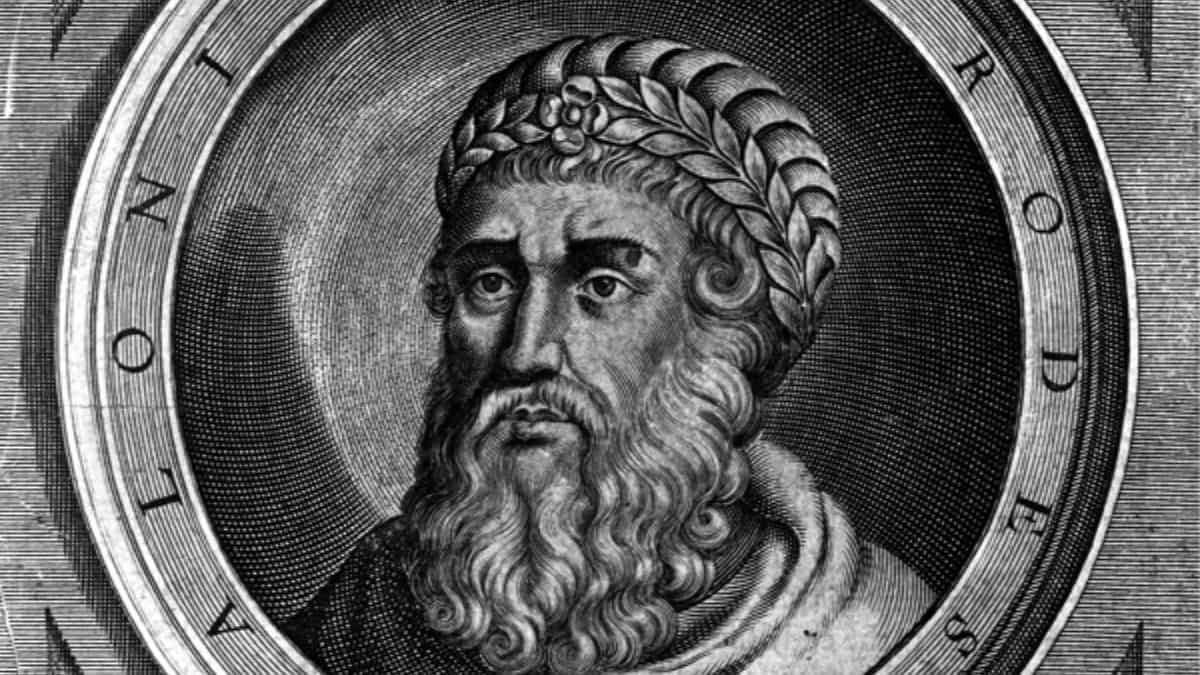
Why Herod Actually Died in 1 BC, not 4 BC
One popular critique in atheist or bible skeptic circles is the census in Luke 2, and how it is supposedly irreconcilable with history. Today we will learn why, in fact, the world is wrong (as usual) and God’s word proves true.
The issue of the dating of the census in Luke 2 is one that revolves around misinterpretation of history and confusion of timelines. First, we have ample evidence that Jesus was born in 3 BC. This comes from the 70 weeks prophecy timing, testimonies of ancient Chinese astronomers regarding 31 AD and the celestial events that took place at the crucifixion, Revelation 12 imagery and the astronomical alignments of Jesus’ birth in 3 BC, the timing of the Roman emperors’ reigns and several other factors I discuss in my video on this prophecy. So Jesus was born in 3 BC with absolute certainty, and that means Herod cannot have died in 4 BC as the mainstream critics and historians like to argue. Herod must have been alive and died afterward. Luke is also extremely meticulous, so it’s laughable to think that he got so many important details right and yet fudged something so critical and within his own lifetime, like the death of Herod. So these two points alone call into question the mainstream narrative. Now, when we examine circumstances around Herod’s death, we learn he actually died in 1 BC, not 4 BC.
The confusion around Herod’s death stems from misinterpreting Josephus’s statement that Herod died ‘soon after a lunar eclipse and before a Passover feast.’ Historians have struggled with this because multiple lunar eclipses occurred during the period from 7 BC to 1 BC — specifically on March 23, 5 BC; September 15, 5 BC; March 13, 4 BC; and January 10, 1 BC. The key is determining which eclipse actually corresponds to Herod’s death. According to Ernest Martin’s research, only the January 10, 1 BC eclipse stands up to scrutiny when validated against all the chronological parameters.
Basically, Herod’s death and funeral required approximately 10 to 12 weeks of activities — planning, ceremonies, and related events. This means nearly three months had to pass between the lunar eclipse and the following Passover to complete all funeral-related activities. The January 10, 1 BC eclipse fits perfectly with a death date of January 28, 1 BC, leaving sufficient time before Passover while still being ‘soon after’ the eclipse as Josephus described. This date is even corroborated by Jewish historical records: the Megillat Taanit (the Scroll of Fasting) mentions Shevat 2, which corresponds to January 28, 1 BC, as a day when Jews celebrated Herod’s death—which makes sense given that Herod himself predicted the Jews would celebrate his passing.
Mainstream historians point out that while 4 weeks is tight, it is not historically impossible for a rushed royal funeral. Furthermore, critics argue that Martin misunderstood the Jewish customs of shivah (7 days of mourning) and sheloshim (30 days). They argue these periods run concurrently from the day of burial, meaning Herod’s son Archelaus did not need to wait 3 months to conclude the mourning rites before Passover. However, the response to this is that this timeline is physically and culturally impossible based on Josephus’s own incredibly detailed itinerary. After the eclipse, Josephus records a massive sequence of events: Herod’s physical collapse, a slow journey to the hot springs of Callirrhoe, a return to Jericho, the ordering of a mass execution of Jewish leaders at the hippodrome, his actual death, a grand royal burial preparation, and a multi-stage funeral procession. Following the burial, a mandatory 7-day mourning period occurred, followed by a massive royal feast hosted by Archelaus, and then a major public rebellion that had to be addressed before Passover. Trying to cram a robust funeral procession, weeks of medical travel, a 7-day mourning period, and a national revolt into 25 days defies geographical and historical reality. The 12-week window offered by the January 10, 1 BC eclipse is the only logistically viable option.
Regarding the Megillat Taanit (Scroll of Fasting), rabbinic scholars and historians debate who the ‘enemy’ in the text actually is. Many argue the scroll is referring to the death of Alexander Jannaeus (a Hasmonaean king who died decades earlier) or John Hyrcanus, rather than Herod the Great. Because the scroll does not explicitly name Herod for that specific date, mainstream academia does not view it as a definitive anchor point. But what would you expect coming from people who have every incentive to deny the legitimacy of Christ as the messiah (Judaism) and atheists who think the Bible is a bunch of fairytales? The response to this argument is that the text explicitly notes the 2nd of Shevat as a day of joy because ‘the enemy of the Jews died.’ Herod famously knew the Jews would celebrate his death, which is why Josephus notes Herod commanded his sister to slaughter Jewish elites upon his passing so the nation would truly weep. Furthermore, the 2nd of Shevat maps precisely onto January 28, 1 BC—exactly 18 days after the January 10 eclipse. This matches Josephus’s narrative that Herod died a couple of weeks after the eclipse. Shifting this to 4 BC forces the death to mid-April, which completely misses the Shevat calendar marker and strips the historical document of its highly specific chronological fit.
Regarding the War of Varus, the mainstream historians contend that the war is not ‘lost’ in the 4 BC timeline. They claim that Roman history extensively documents Varus serving as the Governor of Syria from roughly 7 BC to 4 BC. Josephus records that Varus explicitly intervened immediately after Herod’s death to quell the rebellion, crucifying 2,000 insurgents. They argue that shifting this war to 1 BC requires shifting Varus’s entire documented Syrian governorship, which they argue clashes with established Roman consular records. But history is complex and full of surprises, and the assumption that Varus only governed Syria until 4 BC relies on heavily damaged or misinterpreted Roman coins and records. In fact there are alternative Roman coinage and consular records indicating Varus actually had a second term of administration or a special military command in Syria around 1 BC. This explains why the ‘War of Varus’—a massive deployment of 20,000 Roman troops to crush the Judean tax revolt—shows up with distinct archeological destruction layers and military movements matching the 1 BC geopolitical landscape. Rome rarely sent 20,000 troops for a minor local scuffle; it was a massive campaign triggered by the unique power vacuum left by Herod’s death in 1 BC.
Lastly, the reason the mainstream consensus firmly sticks to 4 BC is the recorded reigns of Herod’s sons (Archelaus, Antipas, and Philip). According to Roman and Jewish records, all three sons began counting their regnal years in 4 BC. For example, Herod Antipas was deposed by Rome in 39 AD after ruling for 43 years (39 AD minus 43 years lands exactly on 4 BC). However, the practice of ‘antedating’ (backdating) a reign was a very common political tool in the ancient Roman client-kingdom system. Herod’s sons were widely despised by the Jewish population and suffered from weak political legitimacy. By backdating the start of their reigns to 4 BC — the year their father Herod originally executed their rival brothers (Antipas and Aristobulus) and first named them as heirs in his earlier wills — they legally delegitimized any alternative claimants to the throne. Furthermore, there is strong evidence that Herod’s sons were appointed as ‘co-regents’ or joint-rulers with their failing father in 4 BC anyway. When Herod died in 1 BC, his sons naturally continued counting their rule from their original 4 BC political appointments, meaning their 39 AD timelines do not prove Herod died in 4 BC but only reinforce the 1 BC timeline when considered in the cultural and political climate that they existed.
An example that reiterates these fine historical nuances actually comes from the next chapter, in Luke 3. I discuss these points in detail in my Daniel’s 70 Weeks video. The point is that Luke’s timestamp (in the 15th year of Tiberius) is far more sophisticated than most scholars realize. It reflects a pragmatic understanding of political reality, not just official records. In other words, Luke is very aware of the political realities of his time as they actually manifested, not just as how they are written in the history books. With that in mind, Tiberius didn’t begin his reign in AD 14 when Augustus died. He was actually made co-emperor with Augustus around AD 12-13, receiving co-princeps powers (equal authority over all provinces) while Augustus was still alive. There are many historical proofs for this, like coins, and this is also documented by ancient historians like Suetonius and Valleius Paterculus. So when Luke says ‘the 15th year of Tiberius,’ he’s counting from when Tiberius actually began ruling jointly with Augustus — not from Augustus’s death as most people today think. That means the 15th year of Tiberius’s actual rule was AD 27, not AD 29, and that’s what Luke is reporting because he’s very aware of the goings on of his day.
Luke demonstrates this pragmatic approach elsewhere in the same passage. When he mentions both Annas and Caiaphas as high priests, he’s not making a chronological error. Luke is very meticulous and intelligent. Rather what’s happening is a recognition of political realities. Annas’s official tenure ended before John the Baptist’s ministry began. But Annas was the father-in-law of Caiaphas and the real power behind the scenes, influencing decisions from the shadows. Luke recognizes this hidden political reality and is commenting on it, because others would be aware of these things and understand them contextually. That’s also what he does with Tiberius and Augustus: he acknowledges that Tiberius was already ruling before Augustus officially died. Luke isn’t slavishly following official records, he’s reporting the actual power dynamics that people understood and therefore would know when exactly these testimonies happened.
So now put it all together and what do you get? What you get is that history is exceedingly complicated and nuanced. But we can always trust the Bible over the world, and whenever there’s a conflict that seems to call it all into question — recognize that you’re being tested and choose faith, dig deeper and use the resources God has given us to find the truth because it’s always there. History has always corroborated the Bible, and it always will because history is decreed by God and the Bible is God’s word. By realizing all of these complex realities of overlapping leadership, cultural traditions, contextual or idiomatic dating practices, political intrigues and nuances — we stand firm on the date of Christ’s birth as 3 BC and Herod’s death therefore as 1 BC, exactly as the Bible reported it through the overlapping of the Herod and Quirinius’ lives.
This corrected chronology upholds the 70 weeks prophecy and all of the timestamps in the gospels, especially Luke. It also unlocks understanding of the War of Varus, a little known yet major Roman military conflict that historians had mysteriously lost in the historical record. When you place Herod’s death at January 28, 1 BC instead of 4 BC, the War of Varus suddenly appears in Roman documents exactly where it should be — beginning in spring/summer 1 BC, just over two months after Herod’s death. Rome deployed approximately 20,000 troops from Syria for this operation, making it one of the most serious military campaigns in Palestine between Pompey (63 BC) and the Roman-Jewish War (AD 66-73).
This also upholds our crucifixion date of 31 AD, which means in just a few years we will see the 2000th anniversary of that date. What a time to be alive, eh?
For a treatment of these and other theological topics in detail, please see my book “The Seven Transformations: Finding the Narrow Road by Pursuing a Sovereign Christ.”


Your knowledge of both the scriptures and history is what set you apart from everyone else. Well, done Tudor. Keep them coming, you are a light in the darkness for sure!
Very edifying Tudor as with your every post I am more convinced our paths meeting was no coincidence and confirms to me you're God sent.. in all my 42 yrs since coming out of The Papacy RCC Beast System and Became a Born Again Follower of The True Gospel of Jesus to the time I started watching your podcast ~2-3 yrs now I've learned more Biblical Truth in this short time and I feel free from all the False Doctrine confusion that this world intended me to never escape from by His Grace for His Glory I'm ever so Grateful He Chose me and is a Sovereign God! Much Love and Appreciation Tudor Keep shedding Abba Light into this Dark Evil World & Rejoice for Our Redemption Draws Neigh